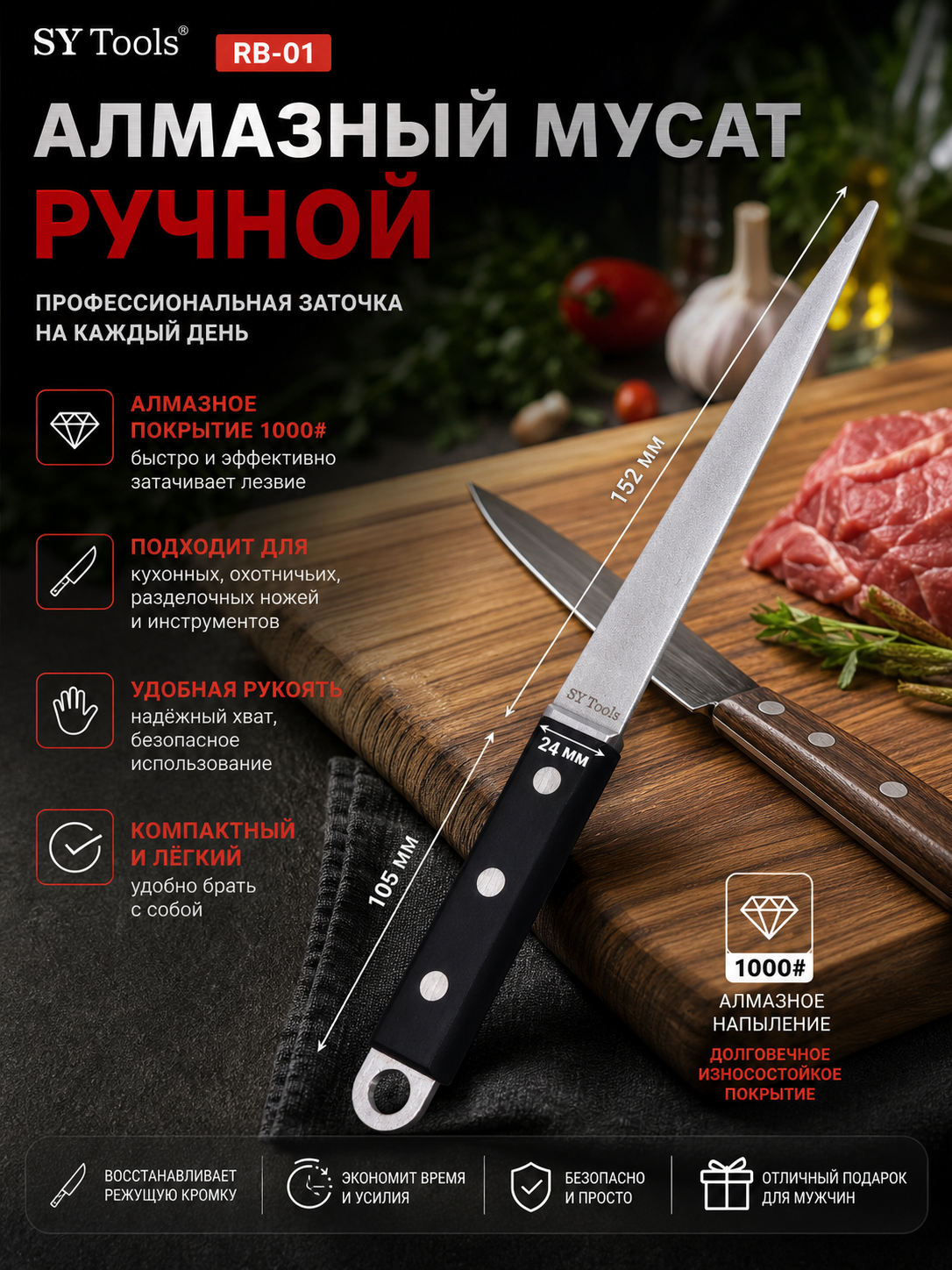
Is a diamond rod a wear item or a years-long tool? I'm Engineer Yanchi Li from Ruimo Tech, and I ran the Sy Tools RB diamond rod through 200 strokes on three "unsharpenable" steels — M390, S30V, D2 — to see how the layer wears and whether the edge actually comes back.
It comes down to abrasive hardness. Diamond runs ~10,000 HV; aluminum-oxide ceramic is 1,500–2,000 HV; but the vanadium carbides inside super-steels are 2,400–2,900 HV. On M390/20CV/S90V a ceramic rod is softer than the carbides it's trying to cut — it skips over them and polishes the matrix, giving shine without bite. The Sy Tools RB diamond-coated rod cuts the carbides directly. Open tests (edcdeal.com) literally file M390/20CV/S90V under "diamond rod, then strop."
Rod: Sy Tools RB. Blades: M390 (60–62 HRC), S30V (58–61), D2 (59–61). 200 light strokes each (~0.5 kg, "doorbell" pressure). Measurements: diamond-layer loss under a loupe, edge recovery (newsprint slice), surface temperature.
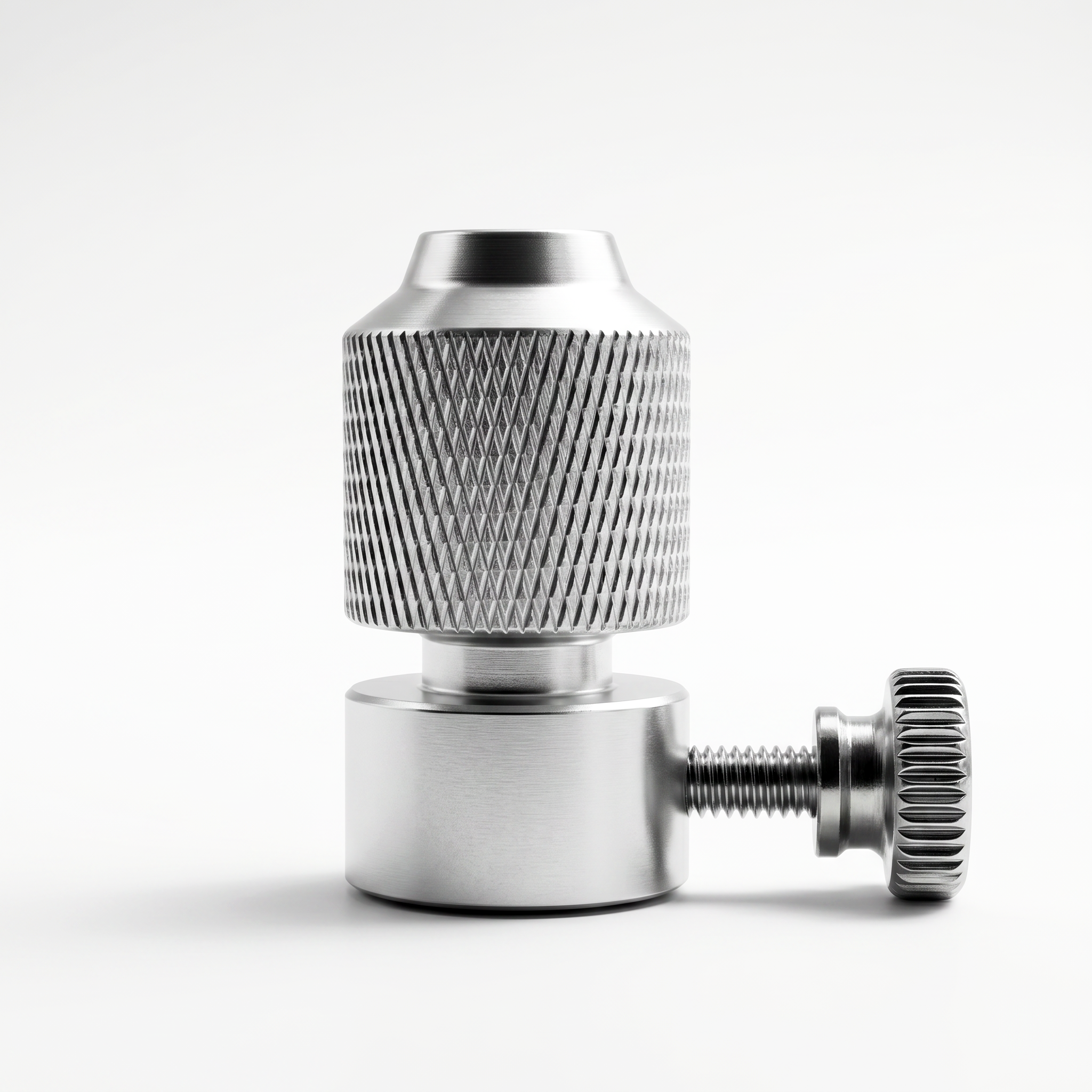
| Steel | Diamond-layer loss | Edge recovery | Temperature |
|---|---|---|---|
| M390 | visible but even | edge restored | warm, no overheat |
| S30V | moderate | edge restored | warm |
| D2 | small | edge restored faster | warm |
On M390 the layer wears more — that's the price of steel hardness, not a defect in the Sy Tools RB. The key: wear was uniform, no bald spots, and the rod kept cutting through all 200 strokes. Light pressure is the rule; heavy pressure flexes the thin steel behind the apex and accelerates layer loss.
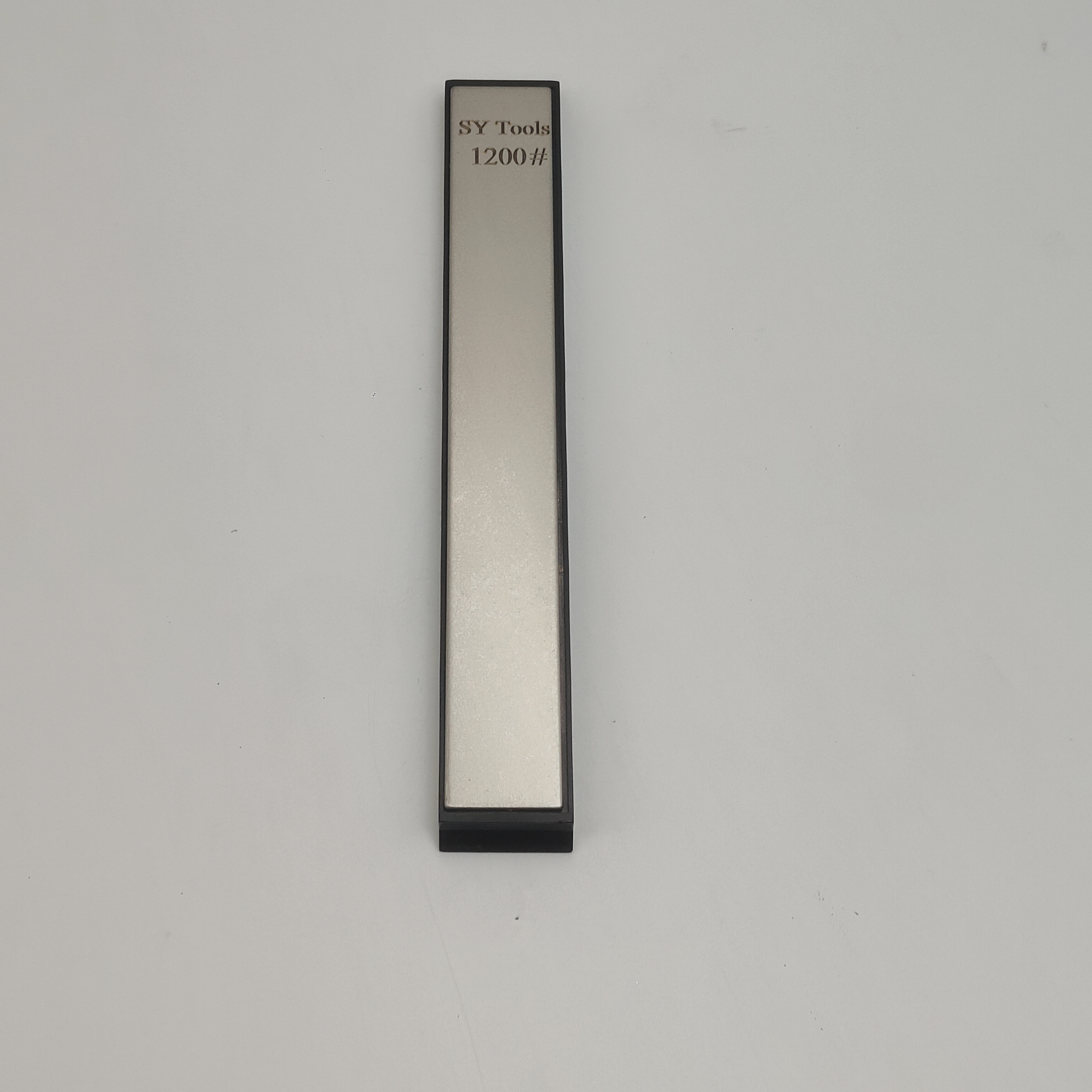
Engineer Yanchi Li's bench notes. Hard facts 2026: diamond ~10,000 HV, vanadium carbide 2,400–2,900 HV, M390 = Böhler 60–62 HRC (edcdeal.com, urbanedc.com). Protocol and table are an honest test, no synthetic ratings. Exact Sy Tools RB size/grit marked "verify on Ozon". No fabricated ratings. Distinct slug from the earlier "rb-diamond-rod-hard-steel-test" (different focus).